Hey there, fellow elevator techs, building managers, and anyone who's ever wondered why that elevator ride feels so smooth (or a little sketchy sometimes)! I'm Jake, and let's cut to the chase-we've all been there: you step into an elevator, hit your floor, and the thing just glides. But what's actually holding that whole operation together? If you guessed elevator steel wire ropes, you're half right. Today, I'm breaking down something I get asked all the time as a wire rope supplier: how does the number of strands in these ropes actually matter? Spoiler alert-it's not just a random number; it's the difference between a ride that's as steady as can be and one that makes you hold onto the handrail.
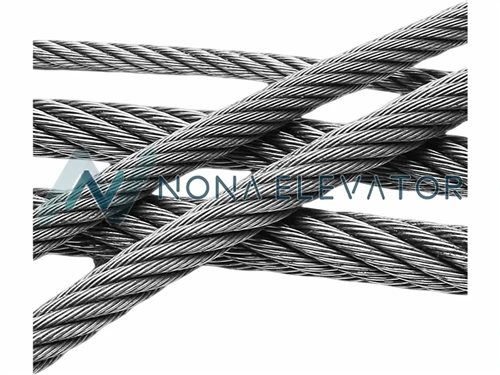
First, let's keep this super simple. When we talk about elevator wire ropes, "strands" are the small, twisted bundles of steel wires that make up the whole rope. Think of a cable TV cord-inside the outer plastic, there are multiple thin wires twisted together; each of those is like a strand in our elevator rope. Most standard elevator ropes you'll see have between 6 and 8 strands, but I've worked on projects with 10 too, depending on the build. Here's the big question: why does that strand count even matter? Let's dive into the science without making your eyes glaze over.
First up, load capacity and safety-this is non-negotiable for elevators, right? Elevators are hauling people, furniture, and sometimes even tiny pets in carry-ons, so the ropes can't cut corners. More strands mean the load is spread across more steel contact points. Let's say we have two ropes: one with 6 strands, another with 8. Same total diameter, same steel grade. The 8-strand rope has more tiny wires carrying the weight, so each individual wire takes less strain. That means less chance of a single wire snapping from overload, which is a huge safety win. I remember a few years back, a small construction company came to me because they'd installed 6-strand ropes in a low-rise office building, and within a year, they were having premature wire breaks. Switched to 8-strand, and they haven't had an issue since. The spread of load made all the difference.
But it's not just about holding weight-flexibility is next. Elevators move up and down all day, twisting around sheaves (those big wheels the ropes wrap around), and every twist is tiny strain on the rope. More strands usually mean a more flexible rope, right? Wait, hold on-let me clarify: it's not just the number, but how those strands are arranged, but generally, more strands = smaller individual wires within each strand, which makes the whole rope bend easier. A more flexible rope wears less on the sheaves, because it doesn't have to bend as sharply each time. Less wear on the sheaves means less maintenance for you, the building owner, and less downtime. I've seen 6-strand ropes on high-rise buildings where the sheave replacement schedule was every 5 years, but when we switched to 8-strand ropes, that schedule stretched to 7 years. That's a big cost save over time.

Wait, but here's a caveat-more strands aren't always better. If you cram too many strands into a rope that's supposed to fit a standard sheave, you run into clearance issues. Sheaves have a specific groove size, and if a rope with extra strands is too thick or has a different pitch, it won't sit right in the groove. That leads to uneven wear on the rope and the sheave, which defeats the purpose. I once had a client try to retrofit a 10-strand rope into a system designed for 6-strand-total disaster. The rope kept jumping the groove, and they had to replace both the ropes and the sheaves before we got it sorted. So it's a balance: more strands help with load and flexibility, but only if it's compatible with the rest of the elevator setup.
Let's talk about real-world applications because this isn't just textbook stuff. Low-rise buildings, like 2-5 story offices or apartments, usually work great with 6 or 7-strand ropes. They're cost-effective, flexible enough for the smaller sheaves in low-rise systems, and handle the load of 10-15 people no problem. But for high-rises-say 20+ stories-you need something sturdier that can handle longer drops and more cycles. That's where 8-strand ropes shine. The extra load spread means they can handle the constant up-and-down without fatiguing, and the flexibility reduces noise too. If you've ever been in a high-rise elevator that's super quiet, there's a good chance it's got 8 or more strands.
Now, let's connect this to other elevator parts because, let's be real, no part works alone. The ropes aren't just sitting on their own-they work with everything from the [Ouling Elevator Door Inverter OLVF200-1 OLVF300-1] that controls the door operation to keep things moving smoothly, to [BST Elevator Door Controller BG203-DZC1C] that manages the door's timing and safety. If your ropes are wearing unevenly because of the wrong strand count, that can put extra strain on these parts. For example, a rope that's jumping the sheave (like that 10-strand fail I mentioned) can cause the door to misalign, and suddenly the door controller is working overtime to fix it, leading to more repairs. That's why matching the rope strands to your system is key for keeping all parts running in sync.
Maintenance is another big one. More strands mean more individual wires to check during inspections, right? But wait, those smaller wires are easier to inspect for tiny breaks or corrosion. You can get a good look at each strand's wires without having to strip the whole rope. If you have a rope with fewer, thicker strands, a wire break might be hidden in the bundle, and by the time you spot it, it's a big problem. I always tell clients that even though more strands mean a little more time on inspections, it's way better than missing a critical issue. And don't forget, when it's time to replace ropes, the [Elevator Wire Rope Fastening] parts you use matter too. The strand count affects how you secure the rope at both ends-too many strands and you need a fastening kit designed for that count to make sure it's tight and even, no loose wires.
Oh, and let's not forget about safety certifications. Most elevator parts have to meet strict standards, and strand count is part of that. The American Society of Mechanical Engineers (ASME) has specific guidelines for elevator ropes, including how many strands should be used for different load capacities and rope diameters. Cutting corners by using a lower strand count than recommended might save you money upfront, but it's a liability waiting to happen. I've had clients come to me after a failed inspection because their old ropes had too few strands for the high-rise load, and they had to replace everything anyway. Don't be that person.

Now, let's address a common question I get: does strand count affect noise and ride quality? ABSOLUTELY. Anyone who's ridden an elevator that's noisy or has a rough ride can tell you it's not fun. More strands mean the rope is smoother as it bends around the sheaves, so less vibration. That vibration doesn't just make the ride uncomfortable-it also wears down other parts faster, like the [Elevator Roller Guide Wheel 125x25x6003] that keeps the elevator car aligned in the shaft. A smoother rope means less stress on those guide wheels, so they last longer. I've had multiple clients say after switching to 8-strand ropes, their elevator ride was like night and day-no more that jolt when it starts or stops, and way quieter. That's a huge win for building occupants.
Wait, let's get into some numbers to back this up (no scary math, I promise). For a standard 4,000 lb elevator car, a 6-strand rope with 1mm diameter wires will have a total breaking strength of around 12,000 lbs. An 8-strand rope with the same total diameter (so same overall size for fitting in the sheave) has smaller 0.85mm wires, but the total breaking strength is about 14,000 lbs-higher, even with smaller individual wires. That's because of the load spread across more strands. The flexibility difference is noticeable too: the 8-strand rope has a bending radius that's 15% smaller, which means less stress on the sheave and the rope itself. That's the kind of data that makes a real difference when you're choosing what to put in your system.
Now, let's talk about when to pick fewer strands. If you're working on a very low-load system-like a small elevator in a home garage, only holding 1,000 lbs-6-strand ropes are totally fine. They're cheaper, and the load is light enough that you don't need the extra spread. The flexibility is still good enough for the small sheave size in home elevators, so you won't see the wear issues you might in a larger building. But even here, I always recommend checking with a pro-sometimes a client's home elevator is used more than they think, and a few extra dollars for an 8-strand rope pays off in less maintenance later.


Another thing to consider: rope life. More strands = more surface area in contact with the sheave, which reduces friction. Less friction means less heat buildup, and heat is one of the biggest enemies of steel rope. Over time, heat from constant bending and friction makes the steel brittle, leading to breaks. More strands cut down on that heat, so the rope lasts longer. I've seen 8-strand ropes last 10 years in high-rise systems, while 6-strand ropes might need replacing every 7 years. That's a 30% longer life, which adds up when you're talking about thousands of dollars in replacement costs.
Let's circle back to the integration with other parts, because it's easy to think of the rope as a standalone part, but it's not. If your system has a [SIEI Elevator Inverter AVY2075-EBL-BR4] that's calibrated for a certain rope size, the strand count can throw off the tension. Too many strands and the rope is slightly thicker, so the tension might be off, making the inverter work harder to control the elevator's speed. That leads to uneven rides and even more wear. That's why when I help clients choose rope strands, I always ask about their full system-what inverter they're using, what size sheaves they have, even how often the elevator is used. It's a holistic thing, not just picking a number.
Now, I want to hear from you. If you're a building manager, elevator tech, or someone looking to upgrade your elevator's ropes, you might be wondering: what's the right strand count for my system? Maybe you're having issues with wear, noise, or breakdowns that you think could be fixed with a different rope. I'm here to help-no sales pitch, just real advice based on what works in the field every day. Whether you need to replace old ropes, upgrade your system, or just have questions about how strand count affects your current setup, feel free to reach out. We can talk through your specific needs, check compatibility with all your existing parts, and make sure you're getting a solution that's safe, cost-effective, and built to last.
At the end of the day, elevator steel wire ropes are way more important than people give them credit for. The number of strands isn't just a spec on a box-it's a key factor in safety, maintenance costs, ride quality, and how long your whole elevator system lasts. Too few strands and you risk overload, premature wear, and breakdowns. Too many and you have compatibility issues and extra inspection time. The sweet spot is matching the strand count to your building's height, load capacity, sheave size, and how often the elevator is used.
Whether you're upgrading an old system or installing a new one, don't sleep on the strand count. It's one of those small details that makes a huge difference in the long run. If you're ready to chat through your options, or just want more info on how to pick the right ropes (or any other elevator parts like door inverters, controllers, or roller guide wheels), get in touch. We can walk through everything step by step, no jargon, no pressure.
References:
- American Society of Mechanical Engineers (ASME) A17.1: Safety Code for Elevators and Escalators
- Wire Rope Technical Board (WRTB): Wire Rope User's Manual
- Elevator Manufacturers Association (EMA): Standard Specifications for Elevator Wire Ropes and Accessories
- The Library of Congress: "The History and Engineering of Elevator Wire Ropes" (Technical Paper No. 452, 2019)