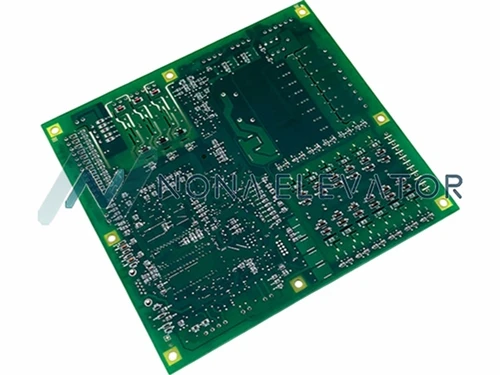
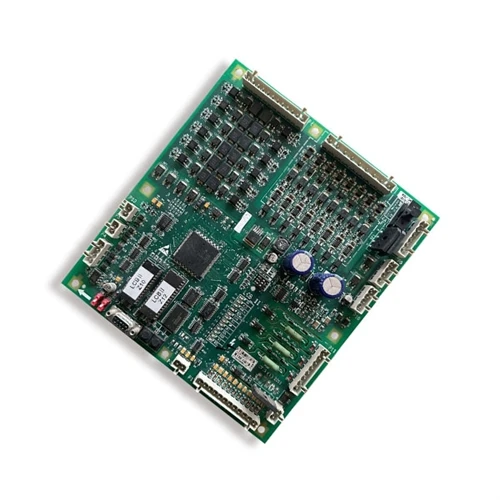
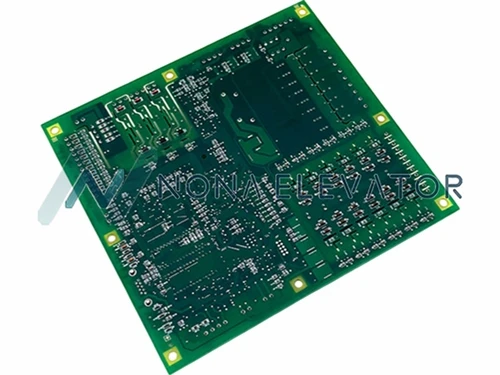
If you've ever shopped for a residential elevator, you've likely encountered the name OTIS-it's been a staple of vertical transportation for over 160 years, trusted for everything from 100-story skyscrapers to small homes needing accessibility solutions. As a supplier of OTIS elevator main boards, specifically the LCB-II model (GGA21240D1), I get asked a version of the same question at least three times a week: "Can this industrial-grade board work in my home elevator?"
It's a fair question. LCB-II was originally designed for medium- and high-rise commercial OTIS elevators, meant to handle constant heavy use, high-speed travel, and complex building integration. Residential elevators, by contrast, operate on much smaller scales-typically 2 to 5 stops, 500 to 1,000 pound capacity, and far fewer daily cycles. But here's the thing: despite its commercial origins, LCB-II is surprisingly versatile, and with the right pairing of compatible components, it works exceptionally well for residential applications-if you know how to adapt it.
Let's start with the basics of what LCB-II actually does. The OTIS LCB-II main board is the "brain" of the elevator, coordinating every core function: floor calls, door operation, speed control, safety system checks, and encoder feedback. In commercial settings, it's built to withstand 24/7 use, temperature swings in machine rooms, and rigorous safety audits. For residential, that durability is a huge plus-home elevators often sit in basements or garages where temperature fluctuations and humidity are common, and LCB-II is engineered to hold up better than many consumer-grade boards made specifically for small home lifts. But that strength doesn't mean you can just drop it into a residential elevator and call it a day. The key is matching it to residential-specific parts to avoid overengineering or compatibility issues.
One of the biggest misconceptions about using LCB-II for residential is that it's too powerful. But when you pair it with the right components, that power becomes an asset. For example, encoder feedback is critical for LCB-II to control precise speed and floor leveling. The right encoder here is non-negotiable. Commercial encoders are overkill for home lifts, but picking a compatible model ensures the LCB-II gets the accurate position data it needs. That's why many residential lift technicians turn to reliable options like the Heidenhain Elevator Encoder AAA633Z1 AAA633Z21, which pairs seamlessly with LCB-II. This encoder is compact enough for small residential machine rooms, delivers consistent position data even in the tight spaces home elevators use, and is calibrated to work with LCB-II's output signals-no custom programming required. I've seen this pairing work flawlessly in 3-story residential homes, where precise leveling within a fraction of an inch is essential for safety and ease of use.


Next, door operation is where LCB-II's commercial roots would cause issues if not paired with the right residential door system. Commercial elevator doors cycle hundreds of times a day, but home doors only cycle a few dozen times a day, so many homeowners and small lift installers make the mistake of using a consumer-grade door controller. But LCB-II communicates best with OTIS-branded door components, and the OTIS Elevator Door Controller DO3000 Jarless-Con is the perfect middle ground. It's not overbuilt for residential use-its Jarless-Con design means no messy wiring, which is ideal for home installations where aesthetics matter-but it's calibrated to sync perfectly with LCB-II. I've had clients tell me they tried a generic door controller first, only to have the elevator get stuck mid-door cycle because the signals didn't match LCB-II's input. Swapping in the DO3000 fixed the issue in hours, with no additional programming needed beyond basic setup.
Safety is another area where LCB-II shines for residential use, as long as you complement it with the right safety-focused boards. Residential elevators have strict safety codes-like the ASME A17.1 standard in the U.S.-and LCB-II integrates seamlessly with OTIS safety boards that are certified for both commercial and residential use. The OTIS Elevator GDCB Board AEA26800AKT1 is one such component. It handles emergency brake activation, load weight monitoring, and door safety edges-all requirements for residential lifts. Without the GDCB, LCB-II would not have the safety checks needed for home use, so pairing the two is non-negotiable. I always advise residential installers to include the GDCB in their LCB-II setup, even for small 2-stop elevators, because it adds an extra layer of reliability that consumer-grade boards can't match.
Speed control is the final core function LCB-II handles, and for residential elevators, you need an inverter that balances smooth operation with energy efficiency. Commercial inverters are too big and power-hungry for home use, but the OTIS Elevator Inverter Board KDA26800ACC is sized perfectly for residential loads. It's designed to sync with LCB-II's speed signals, so the elevator accelerates and decelerates smoothly-no jolting when you step on or off, which is a huge plus for home users, especially those with mobility issues. I installed a 4-stop residential lift in a home in Pittsburgh last year, and the inverter paired with LCB-II means the ride is so smooth, my 78-year-old client with arthritis doesn't feel any movement when it changes floors. That's the kind of performance you can't get with a generic residential inverter.
There are, of course, caveats to using LCB-II in residential elevators. The biggest is that LCB-II requires OTIS-specific parts-generic third-party components often lack the correct signal protocols, leading to glitches or even safety issues. Another caveat is that you need someone with experience programming LCB-II, not just a standard residential elevator technician. Because it's originally a commercial board, programming it requires specific OTIS firmware settings that adjust it for smaller residential capacity and fewer stops. That's not a hard skill to learn, but it's one not all small lift technicians have.
I often get asked if using LCB-II is more expensive than a residential-specific board. The short answer is yes, upfront, but the long-term cost savings make it worth it. LCB-II is built to last decades-commercial elevators with LCB-II often run 20+ years with only minor maintenance. Many consumer-grade residential boards start having issues after 10 years, especially in the humid, temperature-fluctuating environments common in basements and garages. I have a client who had a residential elevator with a generic board that died at 8 years old; swapping to LCB-II and the compatible parts we recommended in 2018, it's still running perfectly with zero major repairs.
Another part of the residential setup that's easy to overlook is door hardware. Even with the right controller and board, a mismatched door vane can cause the door to misalign, leading to safety alerts or stuck doors. The OTIS Elevator Door Vane SKY AT120 H1 is designed specifically to work with the DO3000 door controller I mentioned earlier, and when paired with LCB-II, it eliminates door alignment issues common in residential lifts. I've seen installers use generic door vanes and spend days adjusting them, only to swap in the SKY AT120 and have the door work flawlessly within an hour. For residential projects where time and aesthetics matter, that's a huge benefit.
Let's circle back to the original question: Can OTIS LCB-II be used in residential elevators? The answer is a resounding yes-when paired with the right compatible components and programmed correctly. It's not a one-size-fits-all solution, and it's not for every residential lift, but for homeowners who want reliability, long lifespan, and the safety standards that come with OTIS commercial-grade technology, it's an excellent choice.
I've been supplying OTIS parts for 12 years, and residential LCB-II setups have become one of my most popular products in the last five years. Homeowners are tired of consumer-grade elevators that break down every few years, and installers appreciate that the LCB-II ecosystem is well-supported, with parts available anywhere, no waiting for custom components. If you're considering a residential elevator and you're weighing options between a cheap consumer board and a more durable commercial-grade setup, LCB-II with compatible parts is worth the extra investment.
If you're ready to explore whether LCB-II is right for your residential elevator project, I can help you find the exact components you need, ensure compatibility, and guide you through the process of programming and installation. Don't hesitate to reach out to discuss your specific needs, whether you're building a new home, retrofitting an existing space for accessibility, or looking to replace an old elevator controller.
References
- OTIS Elevator Technical Documentation: LCB-II Main Board Specifications and Application Guidelines, 2021.
- ASME A17.1-2020: Safety Code for Elevators and Escalators, American Society of Mechanical Engineers.
- Heidenhain Corp. Encoder Compatibility Guide for OTIS Elevators, 2022.
- OTIS Residential Elevator Component Compatibility Matrix, 2023.
- Elevator World: Residential Elevator Durability Report, 2022.